Iranian mythology is one of the oldest storytelling traditions in the world. It formed over thousands of years and reflects a culture shaped by spiritual belief, royal power, and deep moral ideas. Long before classical civilizations rose in the region, the people of ancient Iran created stories filled with guardian birds, serpent rulers, and mysterious spirits. These stories explained nature, human behavior, and the unseen world.
If you are interested in nearby traditions, you can explore related guides, such as Armenian Mythical Creatures or Azerbaijani Mythical Creatures.
What is the Simurgh in Persian mythology?
The Simurgh is one of the most admired mythical beings in Iranian tradition. It is known as a gentle, wise bird with great healing power. Its roots go back to the Avestan Saena bird, a figure linked to strength, long life, and insight.
Over time, the Simurgh took on traits from older Indo-Iranian stories and myths from nearby lands, including Mesopotamia. During the Sassanian period, it appeared often in royal designs and ceremonial artwork.
Why is the Simurgh important in Iranian myth?
The Simurgh represents knowledge, healing, and fairness. It is sometimes described as a motherly figure that helps restore balance when the world seems troubled. Many stories show it offering guidance during moments of danger or confusion.
In the Shahnameh, the Simurgh rescues the abandoned child Zal and raises him with care. Later, it helps during the difficult birth of Zal’s son, Rostam, by offering life-saving advice. These scenes show the Simurgh as a symbol of destiny and protection.
Who is Zahhak in Iranian mythology?
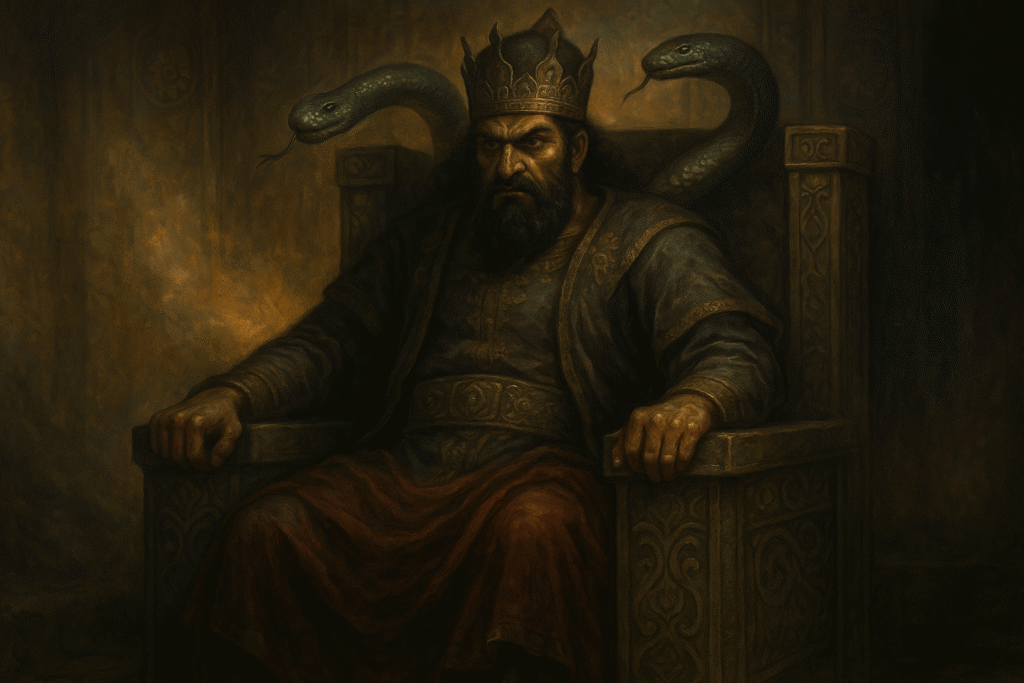
Aži Dahaka, later known as Zahhak, is one of the darkest figures in Iranian myth. His story begins in the Avesta, where he appears as a three-headed serpent creature created by Angra Mainyu. He represents disorder and cruelty, which stand against the justice and order valued in Zoroastrian belief.
Over time, the story shifted. Islamic-era tales portrayed him as a human king who fell into evil through temptation, although his serpent nature remained a key part of the legend.
Is Zahhak based on a real ancient legend?
Zahhak’s story is one of the most famous in the Shahnameh. In this version, he is tricked by Ahriman into accepting evil. This leads to serpents growing from his shoulders, and he must feed them with the brains of young men. His cruel rule continues until Kaveh the Blacksmith raises a rebellion. The revolt unites the people and leads to Zahhak’s capture by the hero Fereydun. The story is often read as a lesson about resisting injustice and defending human dignity.
Zahhak’s image appears across the region, and similar tyrant figures also show up in Afghan folklore. If you are interested in related myths, you can explore Afghan Mythical Creatures.
What is a Peri in Persian folklore?

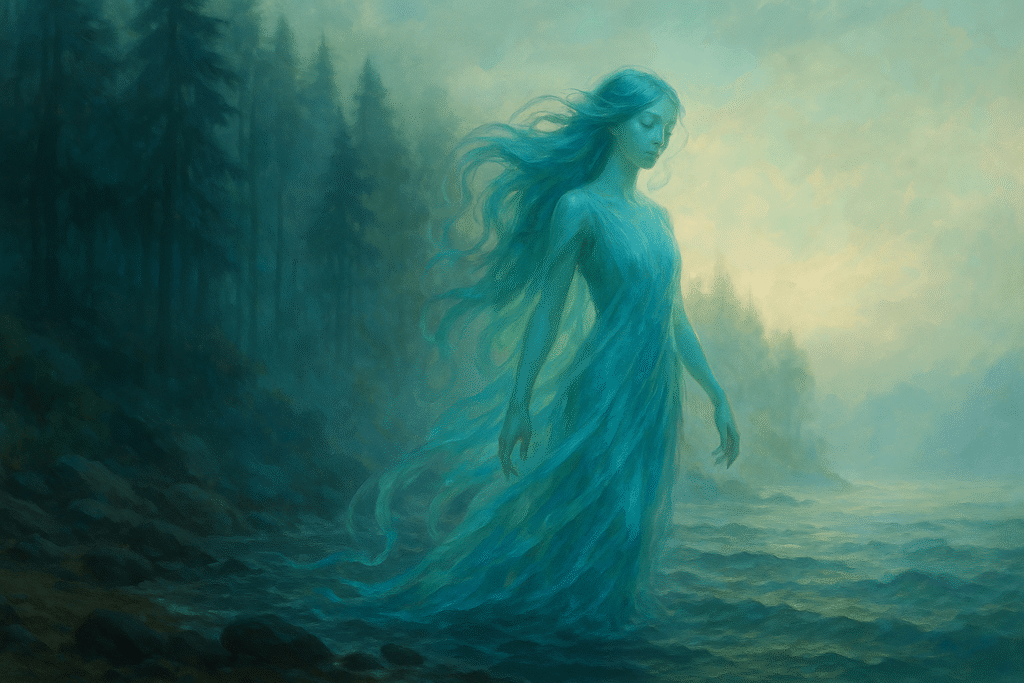
The Peri is a spirit known for beauty, grace, and a gentle presence. In early Zoroastrian stories, Peris were not always kind. They often acted in uncertain ways and existed between good and evil. This reflects the Zoroastrian belief that humans and spirits both face choices that shape their moral direction.
Later Persian writers changed the Peri’s image. In Islamic-era literature, Peris became almost angelic. Their presence in stories often represented hope, compassion, or spiritual longing. Many poets used the Peri as a symbol of inner purity or a guide toward higher understanding.
Peris appear in stories across the region, including Armenian and Pakistani folklore. You can compare these traditions through Pakistani Mythical Creatures.
What are Daevas in Zoroastrian mythology?
Daevas are harmful supernatural beings in Zoroastrian belief. In early Indo-Iranian religion, they were powerful spirits, yet Zoroaster rejected them. He taught that they followed Angra Mainyu, the force of deceit and destruction. This turned them into symbols of falsehood, temptation, and moral weakness.
What is the White Div in the Shahnameh?
In the Shahnameh, daevas appear as divs. The most famous is the White Div, a creature who blinds the king of Mazandaran with magic. Rostam later fights the White Div in a difficult trial that tests his strength and resolve. The battle represents the fight against ignorance and the need for courage in the face of fear.
Divs in Persian lore often symbolize negative emotions or harmful choices. Their stories remind readers that inner struggles can be just as dangerous as outer threats.
What does the Huma bird symbolize in Persian culture?

The Huma bird is known as a creature tied to luck, destiny, and leadership. Stories describe it as a bird that never lands, choosing to live in the sky without touching the ground. This gives it an image of purity and spiritual freedom. Many legends say that if the Huma’s shadow falls on someone, that person is meant to become a leader or enjoy great fortune.
In poetry and Sufi writing, the Huma represents the soul’s rise toward higher understanding. It is also linked to royal approval, which made it a popular symbol among rulers.
The idea of a sky-dwelling bird also appears in nearby cultures such as Azerbaijan. You can learn more through Azerbaijani Mythical Creatures.
Is the manticore originally Persian?
Most historians believe the manticore has Persian roots. The earliest descriptions come from Greek writers, who called it the “martichoras.” They described a creature with a human-like face, the body of a lion, and a tail that could release venom or sharp spines. This style of hybrid being matches the artistic traditions of ancient Iran and the Near East, where carvings often showed protective creatures made from combined animal forms.
Did ancient Persians believe in dragons?

Ancient Persians believed in dragons known as Azhdahas. These were large serpent-like beings connected to destruction or extreme natural events. Their roots reach back to Indo-Iranian myths, where giant serpents often blocked rivers or created droughts. Persian dragons rarely breathed fire. Instead, they were tied to water, storms, and places where danger was linked to nature.
Similar dragon stories appear in Kurdish and Turkish traditions. Readers exploring that influence can visit Turkish Mythical Creatures.
Do different regions of Iran have their own mythical creatures?
Different regions in Iran have their own versions of myths and creatures. Kurdish stories often feature dragons that challenge local heroes. These tales highlight courage and the fight to protect their land. Azeri and Turkic-speaking regions blend Persian myths with Central Asian beliefs. Figures such as the Al Anqa appear in these stories and show clear links to Turkic traditions.
The Caspian coast has myths shaped by forests, rain, and water. Spirits in these tales often live in rivers or wooded areas. In the southeast, Baluchi and nomadic groups tell stories about desert spirits and shape-shifting beings tied to the hardships of life in dry regions.
These regional stories show the wide range of Iranian folklore. They also connect to the traditions of neighboring cultures, which can be explored further in Armenian Mythical Creatures and Pakistani Mythical Creatures.